|
Testimonies from Users |
|
May Associates - U.K. |
|
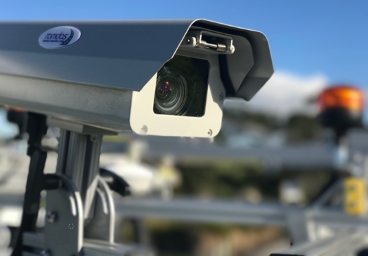
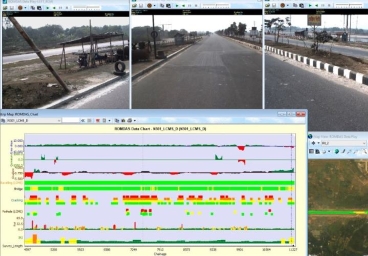
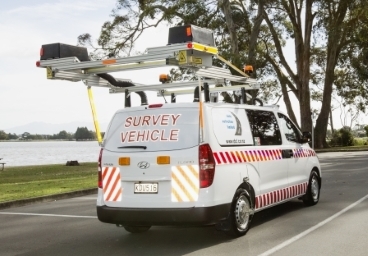
Our ROMDAS system includes [Farnell] bump integrator (BI), video camera, transverse profile logger (TPL) and dual digital gyroscopes. We have used ROMDAS in Africa and Europe and are very pleased with the system. Our clients have been impressed with the productivity and the quality of the data. In the past two years we have carried out ROMDAS surveys on approximately 8,000 km of roads and no component of the system has failed. The ROMDAS software is fairly easy to use and incorporates a "TESTMODE" which allows the user to familiarise himself with the system before going into the field. A comprehensive manual is also supplied which will help the user get to know the system and solve any problems encountered. I am sure Dr. Bennett could also provide training if required. For the roughness survey element of ROMDAS we use a TRL Bump Integrator which has proved to be very robust. ROMDAS will carry out most of the "number crunching" associated with roughness surveys from, producing the roughness equations (through a separate program provided with the ROMDAS software) to processing the raw data to International Roughness Index (IRI). As all data is stored in DBF files they are easily imported to and manipulated in all mainstream spreadsheet packages. ROMDAS will also allow the user to input roughness equations for a range of speeds so, the survey vehicle is not limited to any one speed. Bear in mind that the quality of the roughness data is only as good as the quality of the calibration. Take care when calibrating the roughness meter and check the calibration regularly. In the past we have used a MERLIN or an Abay Beam for the calibration, but HTC do produce a more accurate calibration instrument. The video system has several uses. As the chainage is overlaid onto the video tapes they can be reviewed when studying the roughness data to determine the cause of a particular characteristic in the data. The video tapes have also been used for street furniture inventories and moving observer counts. The TPL uses up to 30 ultrasonic sensors to measure the profile of the road surface. These data can be analysed to calculate the rut depths. A very useful feature of ROMDAS is the keycode event facility. This allows the operator to collect condition and/or inventory data during the survey. The computer keys are programmed to a specific event and when the operator encounters this event he presses the key. The key is then pressed again to terminate the event. A suitably trained operator will also be able to distinguish between differing severities of the defect. ROMDAS is easily installed in a van or 4x4. For our last project in Tanzania we were surveying roads only two hours after the equipment cleared customs. We have used both vans and 4x4s successfully but we always specify a 4 wheel drive vehicle for gravel roads. The survey vehicle can also be utilised for other work when not being used for ROMDAS as the system is easily removed. Indeed for our work in Europe we have installed ROMDAS in a Land Rover Discovery which is can also be used for our Falling Weight Deflectometer surveys. In general, ROMDAS is a cost effective method of collecting pavement condition information. It does include a chainage correction feature to ensure continuity between multiple surveys on the same section of road. All data are stored in DBF files so it is not difficult to import the data to a PMS system or similar if required. ROMDAS is a modular system so the various elements can be added when and if required. |
|
Lea Consultants - Indonesia |
| The [ROMDAS BI] has a better clustering of data and thus generated a higher level of confidence (roughly about 4-5% better). This was most prevalent on the low IRI test sections. [This was due in part to suspension/tyre differences but also] the Romdas BI generate[ing] ten fold the number of bumps per test section. The additional digit (increased sensitivity) on the low IRI sections contributes to a tighter clustering of data and the higher level of confidence. |